LG
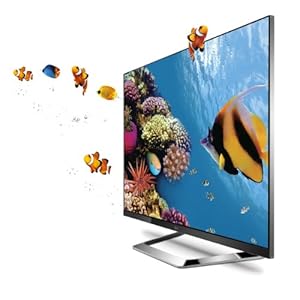
Electronics 60LA7400 60-Inch Cinema Screen Cinema 3D 1080p 240Hz
LED-LCD HDTV with Smart TV and Four Pairs of 3D Glasses (2013 Model)
Got another automatic update yesterday. I have not
determined what changed. Anyway, since last review I played with the
DLNA Receiver fuction. It was there all along, but I didn't understand
it. Basically, you can "Play To" any DLNA device from any other. So I
played some videos directly to the TV from my PC (MS Windows Media
Player DLNA Library), my phone and my tablet. The TV just stops what it
is doing and instantly starts rendering the requested material. Just
make sure you have a robust connection directly between your media sever
and the TV. You can even Play To from Youtube on your phone, or play a
playlist. When the media is done, playng, the TV switches back to
whatever it was doing beforehand.
News as of August 29, 2013:
- At the current price, $300 less than I paid, this unit has to be the deal of the century. Also see the 55 inch. -
Just TODAY, the firmware was updated (both the TV and the smart
remote). AMAZON PRIME IS NOW SUPPORTED!!! Yay, yes it's your birthday.
Now, an almost perfect TV is beyond belief. Amazon Prime is playing in
HD, output through the optical cable to my a/v receiver and the sound is
home theater quality.
Run, do not walk to get Amazon Prime: free shipping and thousands of free videos. Watching Dredd now.
Original review follows.
I
don't think there is much point in discussing the well known obvious
stuff. This is a top of the line 3D LED Smart TV. So you know what that
means. And it is awesome. I can't compare with other brands, but I
couldn't imagine better performance.
Read more 60LA7400 60-Inch Cinema Screen Cinema 3D 1080p
Samsung And LG 55-Inch 3D TVs - A Comparison Review
When LG announced its Infinia 55LW6500 55-Inch Cinema 3D HDTV and included four pairs of passive 3D glasses, one had to figure that this new large-screen high-definition television was going to be just another one of the large crowd of passive-eyeglass 3D receivers that would never compete with the likes of Samsung UN55D8000 55-Inch 1080p, but it does.
The LG Infinia 55LW6500 55-Inch Cinema, for example, is just as sophisticated as the Samsung UN55D8000, but there are some major differences in how they get to the same place.
Indeed, the LG Infinia is probably the more sophisticated of the two receivers because it solves problems without the need for active shutter glasses, which, until you study the technology behind the LG Infinia, seems better. However, once you look at the LG infinia, you realize that it is quite a receiver that really can use passive-eyeglasses.
Let's look at the science of depth perception and 3D first. Normally, your left eye and your right eye perceive the same image from slightly different vantage points. It may only be a difference of five degrees per eye, but when you look at an image and close one of your eyes, you see it slightly differently than when you close your other eye and see the same image.
The brain - nature's greatest computer - does the summing and subtracting so that you have depth perception of 3D. In other words, your brain and the way your eyes perceive a scene - at slightly different angles - gives you depth.
In today's top smart eyeglass receivers, such as the Samsung, you are provided with two pairs of shuttered eyeglasses. Each eyepiece shutter is supposed to totally shutdown for a specific period of time - at 240 Hz each eye actually receives four images for each eye and the shutter is supposed to close for two of the image periods that the shutter is open for the other eye. And, when the first eye is finished, the second shutter opens and presents you with its image while the first is shut down.
Some people claim this encourages crosstalk as you are supposed to be able to the first image even while the second is displaying. Frankly, we've never seen that and then some claim they see flicker on their peripheral vision. Again it's something we've never experienced.
However with the LG Infinia you may never have to think about active shutter technology again. The Infinia uses an active technology but rather than placing it in the glasses which also must synchronize with the Samsung, using Bluetooth technology, the LG uses the screen in place of the eyeglasses.
Using thin film technology, the LG fakes your eyes into thinking they are actually seeing 3D images by using two thin film pages set between the glass at the front of the picture tube in the Infinia and the outer glass. To give the feeling and impression of 3D, thin film images - one for each eye that is changed at the same resolution rate as active glasses - 240 Hz - is slipped onto the screen. It is keyed to the colors on one side of the passive eyeglasses so that you only see one image. The next image is changed the same way, and is keyed to the other color so, again, you only see one image. This eliminates crosstalk, ghosting and other problems associated with both active and passive eyeglasses. It is a most interesting use of technology, one that should be used by others and will likely be because you don't have to invest in expensive active glasses and batteries that also need a sync signal. All you need is the passive glasses, which have been perfected over the last couple of years and you're ready to go.
Feature for feature, the Samsung and LG are on a par. Both are network-centric, in that they are capable of recognizing and using WiFi 802.11 b/g/n hotspots, as well as hardwired networking. Each also has HDMI ports so they can not only hook up HDMI-capable devices such as blu-ray players and high-definition audio players, but they can also function as the center of a a home theater system as they can sync up to Dolby surround sound.
About the biggest difference you will find in the LG versus the Samsung is that while the Samsung uses a keyboard-style device for system control, the LG uses a simple Smart tuner. Actually an infrared controller, the Smart system is easy to use with the LG. For example, when it first comes on, the LG has a row of icons at the bottom that allow you to access and control various features. Plus, the screen presents you with Wizards with which you can change settings easily by simply pressing the home key to access the feature you want and then then Enter key to make the change. You press Home again and you're done. Like the Samsung, there is a wide range of apps available for the LG and it is easy to find them and change the task bar at the bottom of the screen.
The LGscreen also adjusts the brightness to the brightness of the room, another nice feature. On the whole, each system is equally capable the only difference, really, is in how you make the changes.
Samsung And LG 55-Inch 3D TVs - A Comparison Review
LG Cinema Screen
Samsung And LG 55-Inch 3D TVs - A Comparison Review
Samsung And LG 55-Inch 3D TVs - A Comparison Review Samsung And LG 55-Inch 3D TVs - A Comparison Review
LG Cinema Screen
Samsung And LG 55-Inch 3D TVs - A Comparison Review
Samsung And LG 55-Inch 3D TVs - A Comparison Review
BestCustomerReview
Samsung And LG 55-Inch 3D TVs - A Comparison Review
ItemFeatures
Samsung And LG 55-Inch 3D TVs - A Comparison Review
Samsung And LG 55-Inch 3D TVs - A Comparison Review Samsung And LG 55-Inch 3D TVs - A Comparison Review
HDMI Cables - Exploding the Myth and Biased HDMI Cable Reviews
Your home cinema system or audio visual system will require a certain level of cabling to maximise the available sound quality of your system. Therefore you will want to maximise your equipment with digital connections to each audio visual component to achieve the best listening experience. The very good news is that you can obtain noticeable sound quality improvements from your home cinema system through using suitable digital HDMI interconnects (High Definition Multimedia Interface).
In this article we explode the industry biased HDMI Cable Reviews and show you how with inexpensive standard HDMI cable you can achieve excellent results and enhance your home cinema listening experience and get noticeable sound quality improvement through your audio visual system utilising the available digital connections.
Choosing the best HDMI cables for your own system is a fairly straightforward process and there are a few things to be considered before you buy. Firstly, do not get brainwashed by retail shops that try to sell you the most expensive cables because they want you to spend as much as possible rather than understanding the needs or requirements of your home cinema setup - don't be fooled.
So what HDMI Cable would be best suited for my home cinema system?
Firstly, the basic principle behind HDMI is to transmit uncompressed digital data via 2 interfaces and digital data cables should be mainly compared by the quality of the components and manufacture. The HDMI Cable Reviews available seem to focus on the more you spend the more you achieve - well stop and think again. Good quality manufacture of an inexpensive HDMI connector cable gives the same results as spending 10x or 20x more.
Generally you will find that many of the available HDMI Cable Reviews do not explain the importance of the usages in differing applications of the standard home used HDMI interface. It is very useful to understand the importance of the different HDMI specifications, whereby, a Cat 1 cable is capable of sending an audio visual signal to achieve maximum results on a 720p or 1080i TV/LCD screen and a Cat 2 HDMI Cable is capable of delivering an audio visual signal to achieve best results on 720p, 1080i, 1080p & the new 1600p TV/LCD devices. The standard specifications for HDMI are a number ranging from 1.0 to 1.4 which represents the new HDMI specification and interface versions being made available right now, 1.4 being the latest DHMI interface specification. However, don't worry about these numbers as any new HDMI equipped devices are backwards compatible for cabling purposes.
It is important that you choose the minimum length of cable for connecting your equipment and getting an HDMI interconnect that has top manufacture quality. In order to achieve the best sound and video quality from your equipment the digital cabling plays a big part.
HDMI Cables - Exploding the Myth and Biased HDMI Cable Reviews
LG Cinema Screen
HDMI Cables - Exploding the Myth and Biased HDMI Cable Reviews
HDMI Cables - Exploding the Myth and Biased HDMI Cable Reviews HDMI Cables - Exploding the Myth and Biased HDMI Cable Reviews
LG Cinema Screen
HDMI Cables - Exploding the Myth and Biased HDMI Cable Reviews
HDMI Cables - Exploding the Myth and Biased HDMI Cable Reviews
BestCustomerReview
Unboxing & Review: LG Cinema 3D Glasses
Unboxing & Review: LG Cinema 3D Glasses
Tube. Duration : 3.60 Mins.
Unboxing & Review: LG Cinema 3D Glasses
In this video, I unbox LG's new Cinema 3D glasses (AG-F200) and give my impression and review.
Unboxing & Review: LG Cinema 3D Glasses
LG Cinema Screen 2012
LG CINEMA SCREEN 2012 sponsorspot in Sweden and Norway. Visit: For Swedish: http://www.lg.com/se/designtv/index.jsp For Norwegian: http://www.lg.com/no/desig...
LG Cinema Screen 2012
This year has seen the introduction of new terminology from the four major suppliers describing features on their digital TVs.
Labels stating such features as Motionflow XR800, Clear Motion Rate and Moving Picture Resolution have replaced the traditional 50Hz, 100Hz and 200Hz refresh labelling - much the same as when the industry did away with the millisecond response time labelling a few years back.
The introduction of Smart TV has seen an array of feature descriptions stickered on the screens displayed on the show room floor - from Built in Wi-Fi, Skype, Video on Demand, Viera Connect, Bigpond TV to Your Video and Search All.
Other common features include Passive 3D, Active 3D, Opti-Contrast Panel, USB Recording, Time Machine Ready and cornering glass, to name a few.
Features relating to Motion Samsung - Clear Motion Rate Samsung have abandoned the traditional Refresh Rate measurement, and opted instead for a "Clear Motion Rate" label for each of their Series LEDs.
Normally, we are used to being given a Refresh Rate, such as 100Hz, which only refers to the Refresh Rate of the screen. Samsung state that the Refresh Rate only forms part of the Picture quality during fast scenes, where as Clear Motion Rate determines the motion of an image by using three factors: chipset, TV Panel and Backlight.
Refresh rates only determine the number or frames drawn on the screen per second, while the clear motion rate refers to the TV's ability to draw those frames correctly.
Example - Samsung Series 8 LED has a Clear Motion 800 Rating, while the Series 7 LED has a Clear Motion 600 Rating. While the Refresh Rate is 200Hz on both models - the Series 8 has a superior chipset and backlight technology which results in fast motion scenes being clearer.
Sony - Motionflow XR Similar to Samsung, Sony has this year provided a motion quality measurement as opposed to just the Refresh Rate. Sony State that their Motionflow technology creates smooth, detailed moving images for sports or action. Motionflow combines Image Blur Reduction, Frame Creation and backlight blinking technologies together. These three technologies combined are how Sony guages Motion performance from model to model.
Example - Sony's HX820 range of LED have a Motionflow XR400 rating, while the HX925 LEDs have a Motionflow XR800 Rating. While the Refresh Rate is 200Hz on both models - the HX925 combines this with backlight blinking of up to 600 times per second, as opposed to 200 times per second in the HX820, which results in the motion appearing clearer. Basically the Higher the motionflow number, the better the motion enhancement.
Panasonic - Moving Picture Resolution
Panasonic have displayed both the Refresh Rate, and what they class as the Moving Picture Resolution. Just like Sony and Samsung, the Moving Picture Resolution is a metric which basically puts a value on how well a TV Panel deals with motion. The higher the number, the less blur that is added to the signal on the display.
Example - Panasonics ST30 range of Plasma have a Moving Picture Resolution of 1080 lines, and the Panel Speed is 600Hz Subfield Drive. In comparison, the U30 Range of Plasma screens, which also have a 600Hz Subfield Drive, have a lower Moving Picture Resolution of 900 lines, meaning the motion on the U30 won't be as clear as the ST30.
Panasonic, Samsung and LG - 600Hz Subfield Motion
What 600Hz Sub-Field Driving does, with a 50Hz source like how our Australian TV is broadcast, is split each frame into 12 separate frames or "sub-fields", and then show them individually on the screen. That means 12 sub-fields per frame in 50Hz (frames per second) creates 600 frames per second (50x12=600). The more sub-fields you have per frame, the more accurate the colour reproduction and less picture noise.
Features relating to Smart TV Samsung - Social TV
Samsung models labelled with Social TV have the ability to connect to Social Network services Facebook, Twitter and Google Talk. Twitter users can keep watching TV while their Tweets display on a separate part of the screen. Facebook users can also keep watching TV while accessing their Facebook page.
Samsung - Your Video
Your Video is a TV program and movie recommendation service - based on movies that you've selected in the past. You are served up with a selection of movies or TV shows which you are able to preview clips, synopsis, user ratings and even share your likes and dislikes via Facebook and Twitter.
Samsung - Search All
The Search all feature is an application which allows you to search for content or information across every aspect your TV has to offer. Enter a search query into the search all text box, and you are given matches from Your Video, recent Web searches, Tweets, Facebook postings and more. It is a convenient way to find information you are looking for.
Samsung - Smart Hub
Pressing the Smart button on your remote displays the Smart Hub, and it is from here that you are able to access all the TV has to offer in terms of connectivity such as the Web Browser, Your Video, Search All, Bigpond Movies and many more. The Smart Hub is the page you go to access almost every feature that Samsung has to offer.
Samsung - Your Video
Your Video is a TV program and movie recommendation service - based on movies that you've selected in the past. You are served up with a selection of movies or TV shows which you are able to preview clips, synopsis, user ratings and even share your likes and dislikes via Facebook and Twitter.
Samsung - Search All
The Search all feature is an application which allows you to search for content or information across every aspect your TV has to offer. Enter a search query into the search all text box, and you are given matches from Your Video, recent Web searches, Tweets, Facebook postings and more. It is a convenient way to find information you are looking for.
Samsung - Smart Hub
Pressing the Smart button on your remote displays the Smart Hub, and it is from here that you are able to access all the TV has to offer in terms of connectivity such as the Web Browser, Your Video, Search All, Bigpond Movies and many more. The Smart Hub is the page you go to access almost every feature that Samsung has to offer.
Samsung - Samsung Apps
Just like today's smartphones, Samsung have incorporated apps (applications) downloadable via the Samsung App Store. If you have owned an I-Phone you will already be familiar with the endless array of programs you can download and the Samsung App store works in the same manner, albeit on a much smaller scale. There are Video, Game, Sports, Lifestyle, Information and Education apps available.
Samsung - Allshare
Allshare is Samsungs brand name for DLNA (Digital Living Network Alliance) which is a platform for sharing media between compatible devices. Digital Cameras, Camcorders, Smartphones, Tablets, laptops and home theatre systems which are DLNA certified, are all able to be connected through your Home Network and through to your TV, enabling the sharing of Photos, Movies and music without wires.
Sony - Bravia Internet Video
Bravia Internet Video streams a selection of Internet TV channels, via your Home Network, through to your TV. There are channels such as The Wiggles, ABC I-View, You-Tube, Yahoo Plus 7, SBS and many more.
Sony - Video on Demand
Video on Demand is a portal to New Release and back catalogue Movies available for streaming, via your Home Network, through to your TV. You can "hire" movies without having to leave your lounge, and not having to worry about late fees or subscriptions.
Sony - Music Unlimited
Music unlimited is a Music store through your TV - you can search and listen to millions of artists, create playlists via a subscription service from Qriocity.com. Depending on which subscription you choose, you may be able to access features such as Global Top 100 tracks, Music channels compiled from millions of tracks around the world and the ability to create your own playlists and channels. For Subscription prices and further information, visit Qriocity.com.
Panasonic - Easy IPTV
Easy IPTV is Panasonics label for models which provide you with access to Social Networking sites, and have DLNA functionality. Models which have Easy IPTV give you access to You Tube, Twitter, Facebook, Picassa and more, as well as the ability to share Photos, Movies and music with DLNA certified Camcorders, Smartphones, Tablets, laptops and more.
Panasonic - Viera Connect
Viera Connect is an extension of Easy IPTV - besides the social network and DLNA connectivity, Viera Connect also offers Internet TV channels from You Tube, Yahoo 7, ABC I-View and Shoutcast Internet Radio. There is also a catalogue of apps from third-party application developers.
LG - Home Dashboard
Pressing the Home button on your remote displays the LGs Home Dashboard, and it is from here that you are able to access all of the TV's connectivity functions such as the Web Browser, LG Apps, Media Link, Bigpond Movies and many more. The Home Dashboard is the page you go to access almost every feature that LG has to offer.
LG - Smart Share
Smart Share is LGs brand name for DLNA (Digital Living Network Alliance) which is a platform for sharing media between compatible devices. Digital Cameras, Camcorders, Smartphones, Tablets, laptops and home theatre systems which are DLNA certified, are all able to be connected through your Home Network and through to your TV, enabling the sharing of Photos, Movies and music without wires.
LG - Media Link
LGs Media Link application matches information to video files via an extensive database called PLEX. This feature can provide you with movie information such as synopsis, casts, director, viewer ratings for the media content you are viewing, on a nicely laid out full page display.
LG - Apps
LG have Video, Game, Sports, Lifestyle, Information and Education apps available for use and download via the Home Dashboard. LG have a website - LG Apps TV - where you can download hundreds of apps. Visit LG Apps TV HERE.
Features relating to Panel and Contrast Technology
Sony - OptiContrast Panel with Gorilla Glass
Sony's panels which use Gorilla Glass and Opticontrast have a frameless design with glass that reaches right to the corners of the TV. These sets deliver improved clarity by boosting contrast, and increasing brightness and minimizing unwanted light reflections.
Example - Sony's HX820 range of LED have OptiContrast Panels with Gorilla Glass, while the EX720 LEDs have the standard panels. If you watch a movie like Batman, which has many dark scenes, you will find there is more detail in the HX820 than on the EX720 - especially in a brighter viewing environment.
Sony - Sony - Dynamic Edge LED
With Sony's Dynamic Edge LED models, the LEDs behind the panel can have their brightness adjusted to deliver optimum contrast. This means that, depending on the picture you are watching, the Dynamic Edge LED system controls individual parts of the screen independently for a wider contrast within each scene - resulting in a stronger colour reproduction as well as brighter whites and greatly improved blacks.
Sony - X-Reality, and X-Reality PRO
X-Reality is Sony's brand name for their Picture processing engine. Every TV has a chipset inside which is responsible for how the image finally looks on the screen. It is like the puppet master, with the puppets being all of the other aspects of the TV like the Panel, Tuner, Refresh Speed and Contrast to name a few. These all rely on the Picture Processing Engine to combine them and deliver a result as high as possible. The X-Reality engine is the standard in five levels of Bravia TVs, with the HX Models both having X-reality PRO Picture Engines. Along with the benefits of their standard processor, X-Reality PRO combines a dedicated 2nd image processor which tweaks hue, saturation, brightness, and in addition, Super Bit Mapping and face detection technology. In simple terms, more processing power delivers clearer images, and better colour reproduction.
Samsung - HyperReal Engine
HyperReal Engine is Samsungs brand name for their Picture Processing Engine. It is the chipset responsible for Contrast, Motion and Colour, and optimizes performance and image enhancement.
Samsung - Micro Dimming
With Samsung's Micro Dimming LED models, the LEDs behind the panel can have their brightness adjusted to deliver optimum contrast. The Micro Dimming LED system controls individual parts of the screen independently for a wider contrast within each scene -resulting in less judder and artefacts as well as brighter whites and greatly improved blacks.
Samsung - Clear Image Panel
The new Samsung Plasma range uses a new filter and panel structure to produce clear images from wider angles. Compared to the conventional glass filters used in the past, Samsungs Clear Image Panels eliminate the layered images you may see on some sets using conventional glass filters.
Samsung - Ultra Clear Panel
Similar to Clear Image Panels in the plasma range, Ultra Clear Panel is the terminology Samsung are using to describe the panels in their LED range. Ultra Clear Panel eliminates diffusion and absorbs much of the external light which provides a comfortable viewing experience with minimal detail loss.
Samsung - Wide colour Enhancer, and Wide colour Enhancer Plus
The wide colour enhancer is a new chipset in Samsungs 2011 range which simply improves the colour quality in detailed scenes. The wide colour Enhancer Plus is described as a superior enhancer which drastically increases the colour spectrum and improves upon the colours created with the standard Wide Colour Enhancer chipset in detailed scenes.
Samsung - Cinema Black
Cinema Black is a very clever feature designed to improve your viewing experience of movies watched in letterbox format. You will come across many movies in 2.35:1 format, which give you a black band top and bottom of the picture. Cinema black switches off the LEDs at the top and bottom to provide a deep pitch black which highlights the image and provides a more immersive viewing experience.
Panasonic - Neo Plasma
The higher models in Panasonics Plasma range, the ST, GT and VT models, are gifted with Panasonics Neo-Plasma panels. Neo-Plasma is the name given to Panasonics high performance screens, which produce smoother Motion, higher Contrast and better efficiency. The Neo-Plasma is capable of a 5,000,000:1 Dynamic Contrast Ratio, which produces industry leading black levels.
Panasonic, and LG - THX Display
THX Certified Plasmas and LEDs, featuring THX Movie Mode, let you recreate shadow, colour and detail as it was intended to look like when produced in the studio. Each TV and has gone through a rigorous design and laboratory testing process, which includes more than 400 data points to ensure exceptional image quality and signal processing performance from your set. Read more about THX certified panels HERE
Panasonic, Sony and LG - 24p Cinematic Playback, 24P True Cinema and Real Cinema 24P
If your Blu-Ray player is set to output 1080p/24 directly, which most Blu-Ray Players can do, then with a 24p processor you're seeing the image as close as possible to how the director intended - how it looks when displayed on a cinemascreen from a film projector at your local movie theater and with the reduction of a lot of the artefacts.
LG - LED Plus
LG's LED Plus technology is the name given to LGs panel lighting system. LED Plus provides even greater control of brightness through local dimming technology to deliver better contrast, amazing clarity and colour detail.
LG - XD Engine
XD Engine is LGs brand name for their Picture Processing Engine. It is the chipset responsible for Contrast, Noise Reduction, Motion and Colour, and optimizes performance and image enhancement.
Features relating to 3D Technology
LG - Passive 3D Technology, or Cinema 3D
Passive 3D means the ability to watch 3D without having to use powered (or as they are known - active shutter) glasses. The big benefits of passive are lightweight, comfortable and cheap eyewear, without the flickering you can get from active shutter glasses. Another benefit to passive 3D glasses is that because we are shown both images at once it doesn't halve the frame rate of the content like active glasses do. Passive glasses cost a fraction of the Active Shutter Glasses from Sony, Samsung and Panasonic.
Samsung - 3D Sound
Samsung's 3D Sound Technology delivers a greater depth of sound than traditional stereo speakers, creating a more immersive experience through what is described as "Depth Rendering Technology". Simply put, a series of speakers in the set can switch on and off, and volume to each is adjusted according to the image on the screen, providing a wider range of sound.
Samsung, Panasonic, LG and Sony - 2D - 3D Conversion
Some models from each of the suppliers enable you to convert regular 2D Images into 3D images, enabling the viewing of content not originally recorded in 3D to be viewed as such. The resulting image will not give you as much of an impact and depth as properly recorded 3D content will, as such content is shot using specific dual lens 3D Cameras. It will however create a little depth on your favourite non-3D content.
Design, Connectivity and other Various Features
Samsung - Plasma +1
With Samsungs 2011 range of Plasmas marked with Plasma+1, the screen size has been increased by 1 inch diagonally, due to cosmetic improvements from the thinner bezel. Samsung provides 43" and 51" sizes compared to 42" and 50" size offerings from LG and Panasonic.
Samsung - Eco Sensor
The eco Sensor is a chipset inside the TV set which senses the room brightness, and adjusts the TVs brightness and backlight settings accordingly. This results in a controlled amount of light being emitted from the screen, which in turn reduces or levels out the energy usage.
LG - Smart Energy Saving
The Smart Energy Saving Sensor is a chipset inside the TV set which senses the room brightness, and adjusts the TVs brightness and backlight settings accordingly. This results in a controlled amount of light being emitted from the screen, which in turn reduces or levels out the energy usage.
Panasonic - Eco Mode
Eco Mode is a chipset inside the TV set which senses the room brightness, and adjusts brightness and backlight settings accordingly. This results in a controlled amount of light being emitted from the screen, which in turn reduces or levels out the energy usage.
Sony -Sony - Intelligent Presence Sensor, Face Detection
Bravia TVs with Face Detection and Presence Sensor technology will dim or turn off the screen if you look away or leave the room, and is designed for those people who like to have the TV on just for a bit of background noise, or while surfing the web or reading a book. The settings can be varied to suit the situation - from the picture turning off when you look away, to the picture remaining on for a specified length of time after the last detected movement.
Samsung - Anynet+
Samsungs Anynet Technology allows you to control any connected HDMI-CEC device with a single remote control. Features and benefits include switching to the correct AV input when you turn on the connected device, and the ability to control both the TV and connected device with the one remote.
Sony - Bravia Sync
Sony's Bravia Link Technology allows you to control any connected HDMI-CEC device with a single remote control. Features and benefits include switching to the correct AV input when you turn on the connected device, and the ability to control both the TV and connected device with the one remote.
LG - Simplink
Lg's Simplink Technology allows you to control any connected HDMI-CEC device with a single remote control. Features and benefits include switching to the correct AV input when you turn on the connected device, and the ability to control both the TV and connected device with the one remote.
Panasonic - Vieralink
Panasonics Viera Link Technology allows you to control any connected HDMI-CEC device with a single remote control. Features and benefits include switching to the correct AV input when you turn on the connected device, and the ability to control both the TV and connected device with the one remote.
Panasonic, Sony, Samsung and LG - Wireless LAN Ready, Wireless LAN Built In
Wireless LAN is the protocol required to connect your TV with your Home Network and devices. With Televisions which are labelled WLAN Ready, or WI-FI Ready, these are able to connect to your network with the purchase of a (usually) separate WI-FI Dongle from the manufacturer of that TV. Wireless LAN Built in does not require the purchase of a separate Wi-Fi Dongle to connect to your Home Network.
Panasonic and Samsung - USB Recording
USB recording is the ability, via a connected external USB stick or hard drive; to record the TV you are watching on the screen.
LG - Time Machine Ready
Time Machine functionality allows the unit to automatically record live TV and make it available for viewing at any time. You can pause and rewind normal TV, after initializating USB Device. To use the feature, you must have a USB device over 40 GB.
LG - Magic Motion Remote
LG's Magic Motion Remote is a "Magic Wand" type of remote similar to Nintendo Wii controllers, and allows easy movement of the cursor on the screen without having to press up, down and sideways arrows on your traditional remote.
Samsung - QWERTY Remote
Samsung's QWERTY Remote is an innovative remote control which has the normal television buttons on one side, and a Full QWERTY Keypad on the other side. This allows you type as you would on a normal Keyboard, without the hassle and time lag of pressing numerous buttons to input a single character as in your traditional remote controls when surfing the web or entering information on the screen.
Digital TV Models 2011 - Features Explained
LG Cinema Screen
Digital TV Models 2011 - Features Explained
Digital TV Models 2011 - Features Explained Digital TV Models 2011 - Features Explained
LG Cinema Screen
Digital TV Models 2011 - Features Explained
Digital TV Models 2011 - Features Explained
BestCustomerReview
LG Player
LG Player
Tube. Duration : 0.97 Mins.
LG Player
Acheter sur le siite FR d'Amazon www.amazon.fr Descriptions du produit LG Player 3D Blu-ray Disc and Blu-ray Disc 1080p PlaybackEnjoy 3D Blu-ray Disc movies in stunning Full HD 1080p. Bring the 3D cinema experience into your home with the LG HR600 3D Blu-ray disc player. Enjoy your favourite 3D movies in the highest possible quality in amazing 1080p high definition. The LG HR600 also supports standard Blu-ray Disc movies in high definition and upscale DVDs to near HD quality, allowing you to really get the most out of your existing collection of DVDs. The HR600 provides the ultimate in picture resolution delivering incredible picture clarity and vibrant colours. You'll see up to five times the picture quality and detail in comparison to standard definition and double the detail compared to DVD players. Team this Blu-ray player up with a 3D TV to enjoy the ultimate immersive viewing experience in your living room, with sports, documentaries and blockbuster movies bursting out of the screen for a true cinema experience from the comfort of your own sofa. Divulgation: ParanoShop participe au Programme Partenaires d'Amazon EU, un programme d'affiliation conçu pour permettre à des sites de percevoir une rémunération grâce à la création de liens vers le site FR d'Amazon. Amazon et le logo Amazon sont des marques Amazon, Inc. ou de ses affiliés.
LG Player
.jpg "55LM7600 circular Polarized glasses for Passive LG 3D TVs (4 pairs!)")


